The Organ in St. Mary Magdalene Church
Construction and the Original Instrument
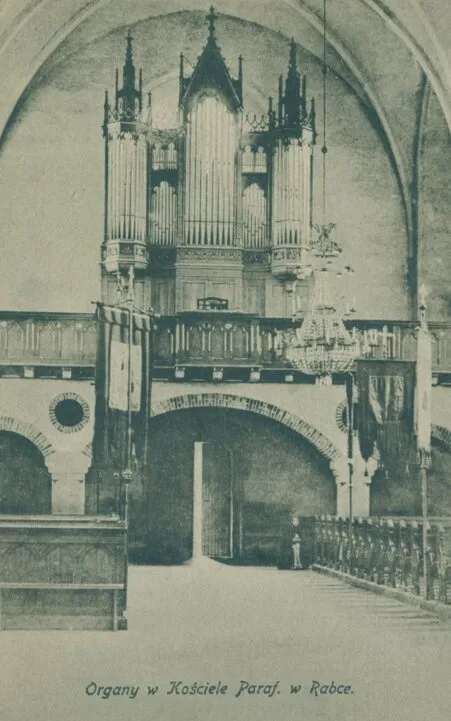
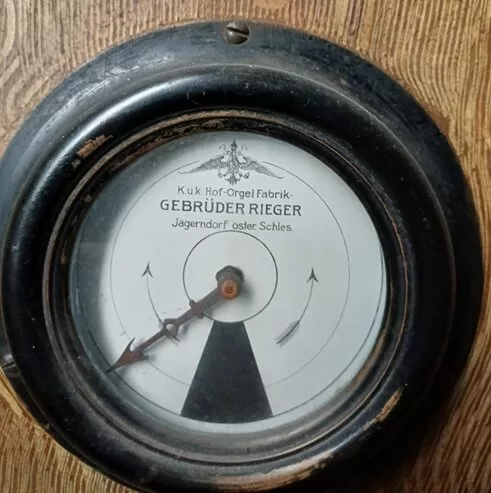
The organ for St. Mary Magdalene Church in Rabka was built by Gebrüder Rieger Jägerndorf in 1908 and assigned opus number 1467. The twenty-stop instrument with pneumatic action originally stood in the centre of the choir gallery. The console was positioned in front of the instrument, in a specially constructed extension of the gallery balustrade. The architectural organ façade reflected the neo-Gothic style. It comprised a single section with three bays, topped by a pointed arch, with two towers at the sides and decorative woodcarvings.
Alterations and Repairs
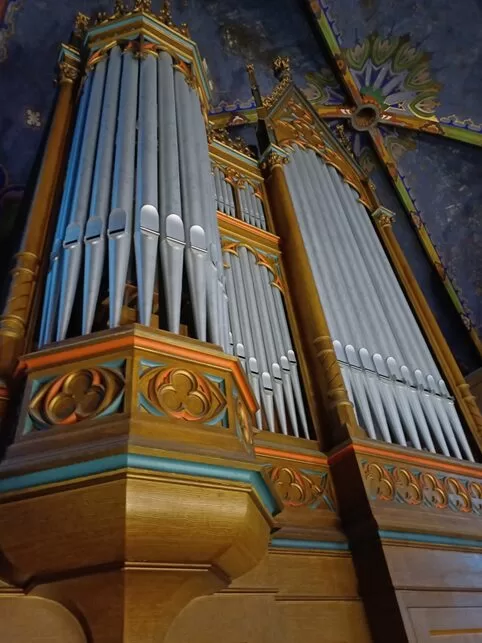
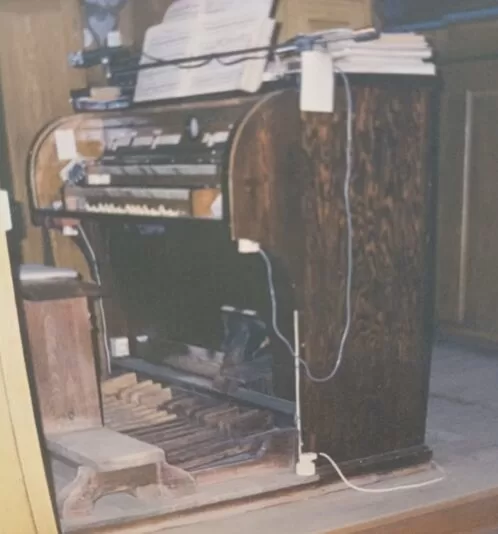
In 1954, Wacław Biernacki's firm from Kraków, under the direction of Mr Profic, divided the organ case into two symmetrical, two-bay cases, each topped by a pointed arch and crowned with a single tower featuring decorative woodcarvings. The alteration was intended to reveal the beauty of the rose window above the church's main entrance. At this time, the instrument was electrified, and its key and stop actions were converted to an electro-pneumatic system. Eight stops, including two reed stops, were added, along with chimes and a blower in the church tower. A new console was installed on a raised platform between the two cases, which housed separate divisions: the left contained Manual I, while the right contained Manual II and the pedal stops. The pipes of Manual II were enclosed in a swell box.
Use and conditions inside the church, including humidity and temperature fluctuations, left the instrument in poor technical condition. In 1976, the organ-building firm Słowik i Bryl carried out a complete overhaul. Two stops were added and several others were revoiced, bringing the instrument to thirty stops. In the 1990s, Andrzej Guziak's organ-building firm from Zakopane took over maintenance of the organ and carried out numerous repairs.
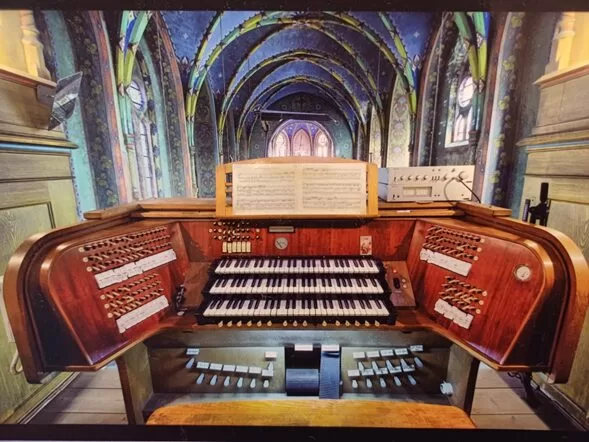
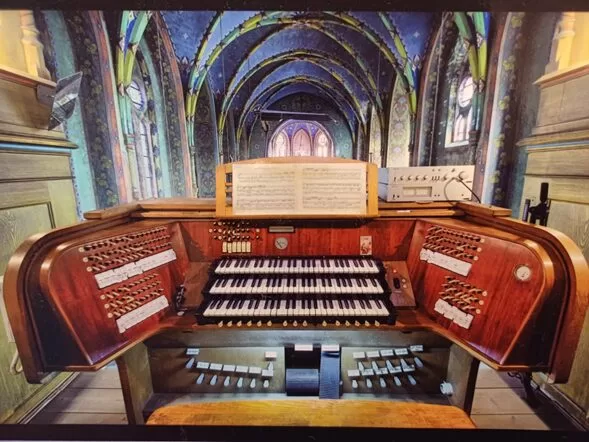
In 2006, with the organ no longer functioning at all, a decision was made to restore it. A second-hand three-manual console was purchased, capable of controlling an electro-pneumatic instrument of up to 60 stops. During the restoration, worn electrical components, including electromagnets and wiring, were replaced. The control cabinet was replaced with a new unit built into the console. A third manual was added, and the stops of the former Manual II were divided between the second and third manuals. A new windchest for the second manual was installed in the right-hand case. Two further stops were added to enrich the sound, and the bellows were restored.
In 2015, new pipes for the Trumpet 8’ stop, made by Klais, were installed to replace the Biernacki stop. The following year, the heavily worn blower was replaced. In 2018, the Trombone 16’ stop installed in the 1950s was replaced with an equivalent stop brought from Germany. To complete the tonal effect, it was decided to add two pedal stops: Principal Bass 16’ and Quint Bass 10.
The Organ Today
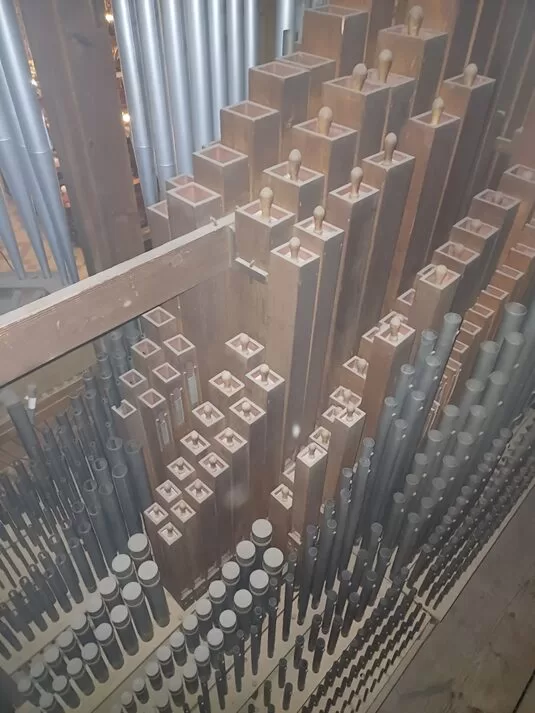
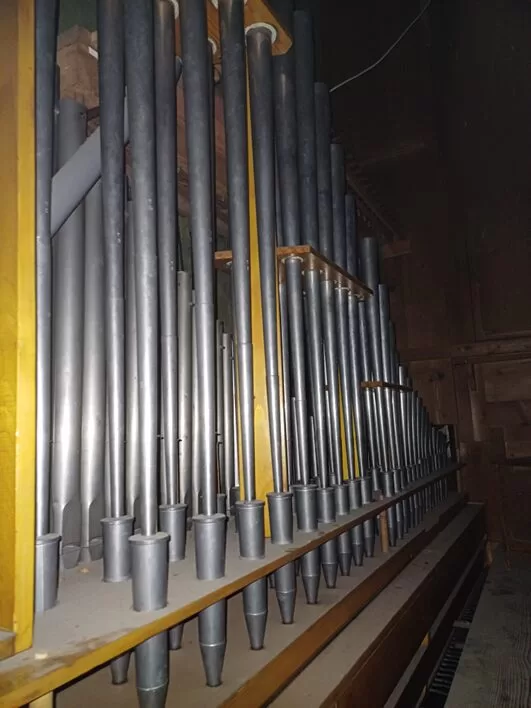
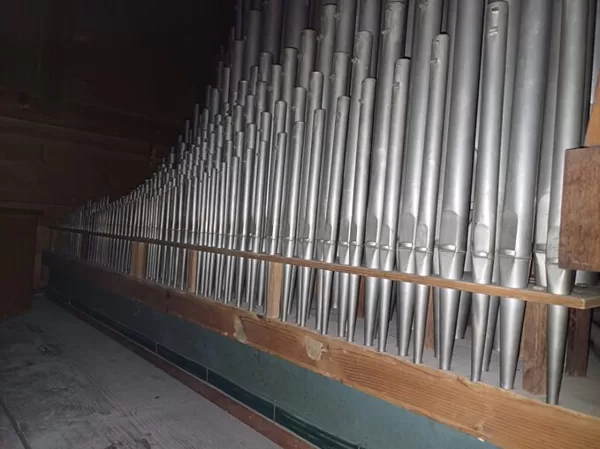
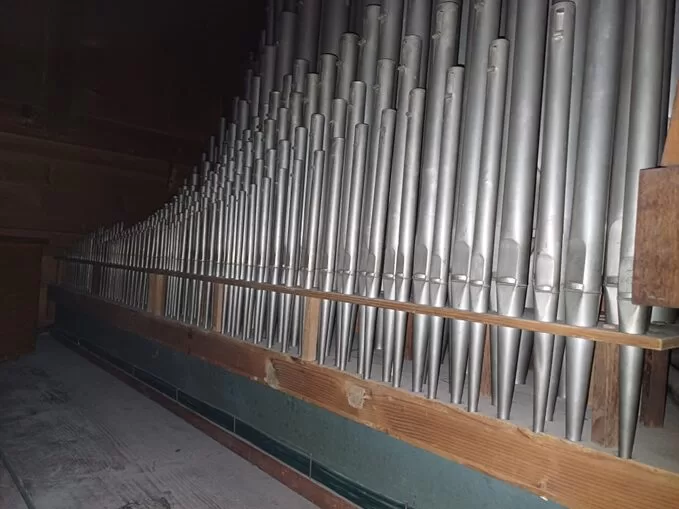
The church organ currently has 34 stops (1,941 pipes). The smallest pipe measures approximately 1 cm, while the tallest is over 5 m. Thanks to its restoration and expansion, the organ at St. Mary Magdalene Parish in Rabka is now among the largest in the Podhale region. The instrument is regularly inspected and maintained by an organ-building firm and the current organist.